Petrol vehicles do not use AdBlue as a petrol additive. A mix-up involving a container or filler needs to be identified accurately before any work is arranged. If the vehicle has already run, stop safely and explain the journey and any warnings rather than trying repeated starts.
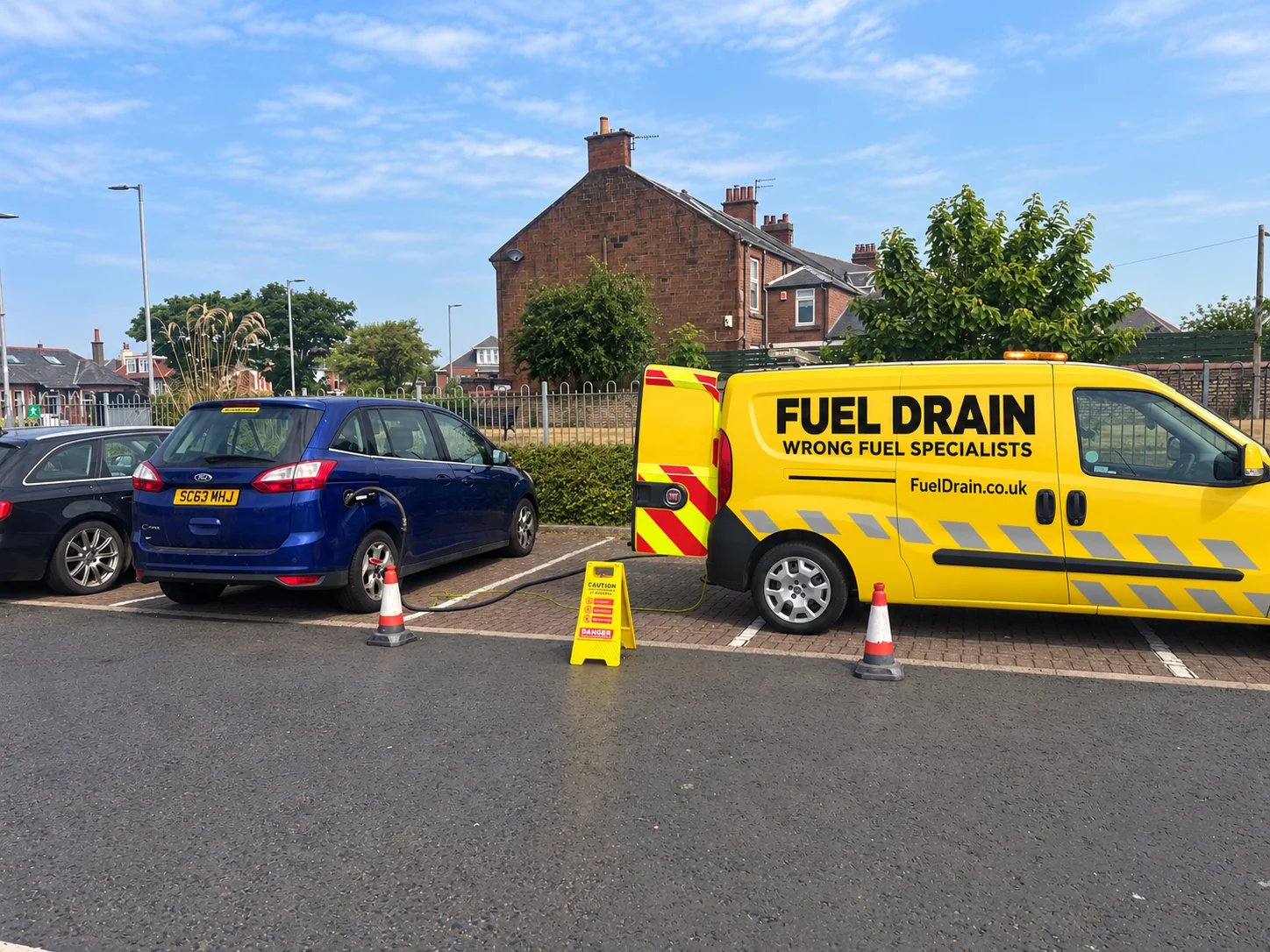
Confirm the fluid and filler used
Keep the AdBlue container or details of the dispensing point, and estimate the amount added. Confirm that the fluid entered the petrol tank rather than another reservoir. If you are unsure, explain exactly where you poured it and provide a photograph if requested.
The tank contents and vehicle specification affect the assessment. Do not top up with petrol to disguise or dilute the mistake. The fact that the vehicle contains a larger quantity of petrol does not establish that it is suitable to run.
If you noticed before starting
Keep the ignition off and leave the vehicle where it is unless a safe alternative movement is arranged. At a filling station, speak to the staff rather than starting the engine to move away from the pump.
Accurately describe any ignition use, start-button press or movement after filling. The technician needs that history to decide what should be checked and cleaned. Early discovery is useful, but the wrong fluid still needs to be dealt with before normal use.
If AdBlue has circulated through the petrol system
Tell us whether the car ran normally, ran unevenly, stopped or showed a warning. These observations help establish the sequence; they do not prove that the fuel system is undamaged or that a particular component has failed.
The response may require more than tank extraction. Cleaning and checks depend on the vehicle and the extent of contamination. The technician will explain whether the proposed mobile work is appropriate and when further workshop diagnosis or repair should be considered.
Arranging the right assistance
Provide the registration, exact location, contamination quantity and engine history. Mention whether it is a hired, leased or fleet vehicle and who can authorise work. A petrol van may also have load, parking or working-site restrictions that affect attendance.
AdBlue-in-petrol work is assessed and quoted separately from an ordinary fuel mix. Confirm availability and the scope before agreeing to attendance. No fixed roadside completion time or guaranteed absence of damage is implied by a booking enquiry.
Attendance, access and the cost of the work
Contamination enquiries are assessed for the vehicle, fluid, quantity, access and whether the engine has run. AdBlue, water and unknown-fluid work should not be assumed to have the same scope or price as a simple petrol-and-diesel mix.
We cover mainland Scotland and the islands. Arrival estimates are confirmed for the vehicle’s actual location and current availability. Time on site is a separate matter and depends on the work. Neither a coverage page nor an initial enquiry is a promise of a fixed completion time.
Before attendance, identify the person authorised to approve the work. The technician explains the proposed service and confirms the cost before starting. If you intend to use a policy, lease agreement or hire-company process, check its requirements with the provider.
Find your coverage areaAdBlue in a petrol tank: common questions
Is AdBlue a treatment for petrol?
No. It is not a petrol additive and should not be added to a petrol tank. If that has happened, leave the vehicle off and arrange assessment.
Can I remove it by filling the tank with petrol?
Adding more fuel does not remove the contamination. Do not use dilution as a substitute for assessment and appropriate removal.
What if I have already tried to start it?
State how many attempts were made and whether the engine ran. Avoid further attempts while you arrange help so the technician has a clear account of the incident.
Is the service different from diesel in petrol?
Yes. Identify AdBlue explicitly; it needs a different assessment from a mix of petrol and diesel. The required work depends on the vehicle and circulation history.