The blue AdBlue filler and diesel filler can be close together, but AdBlue is not meant to mix with diesel fuel. Tell us the amount added, what diesel was already in the tank and whether the vehicle has been powered or driven since the mistake.
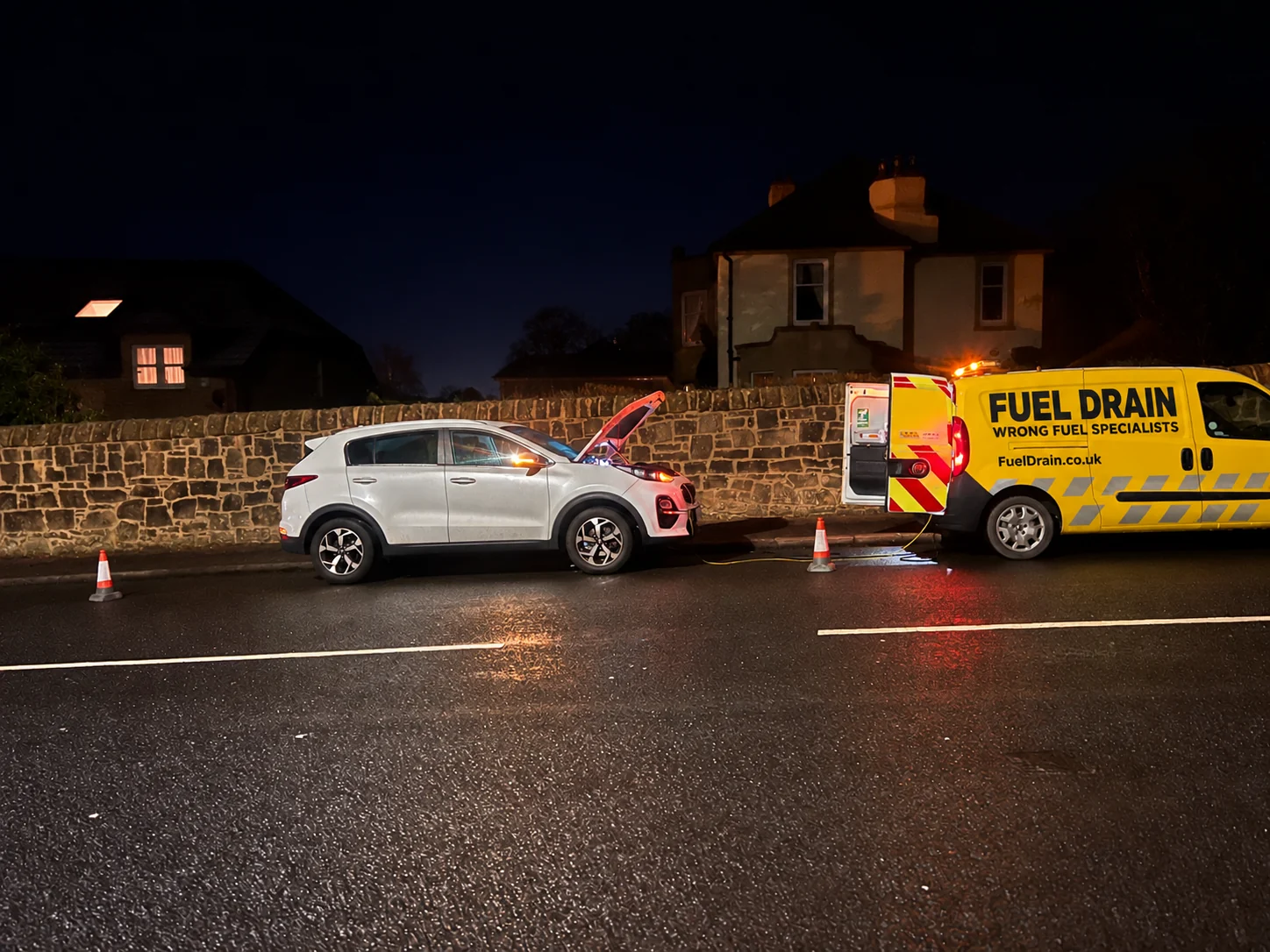
Identify the tank and what happened next
Confirm that AdBlue entered the main diesel tank, rather than diesel entering the AdBlue tank. Those are different incidents. Keep the bottle or filling information so the product and approximate quantity are clear.
Give a straightforward account of the ignition and engine use. Mention a brief start, movement away from the pump, a journey or any failed restart attempts. The distance travelled alone does not tell the technician which parts of the system have been exposed.
Why a standard mixed-fuel drain may not be enough
AdBlue contamination needs attention beyond assuming that diesel and another fuel have been mixed. The tank, fuel path and any affected components need to be considered in deciding what can be cleaned and what needs further investigation.
If the engine has run, the proposed response may be different from a tank-only incident. Vehicle-specific inspection and cleaning requirements matter. Do not accept an assurance from a website that no damage is possible or that every vehicle can be returned to service after the same short procedure.
Do not dilute, test-drive or add a treatment
Adding more diesel does not remove the AdBlue already present. Do not add water, an additive or another chemical in an attempt to make the mixture safe. Avoid starting the vehicle to see whether it will run or whether a warning appears.
If the vehicle is still at a forecourt, explain the issue to staff and arrange a safe position without using the engine. If it is on the road, stop somewhere safe before switching off. Tell us about access, location and any immediate safety issue when arranging assistance.
Cars, vans, HGVs and site equipment
The same basic question applies to every diesel application: where did the AdBlue go and what has operated since? The practical response can vary substantially with tank volume, multiple tanks, vehicle configuration and whether machinery or auxiliary equipment shares the fuel.
Commercial and plant incidents need those details before the attendance and cost are agreed. A simple fuel removal service should not be assumed to include every cleaning, component inspection or repair that an AdBlue incident may require. The technician will explain any further recommendations.
Attendance, access and the cost of the work
Contamination enquiries are assessed for the vehicle, fluid, quantity, access and whether the engine has run. AdBlue, water and unknown-fluid work should not be assumed to have the same scope or price as a simple petrol-and-diesel mix.
We cover mainland Scotland and the islands. Arrival estimates are confirmed for the vehicle’s actual location and current availability. Time on site is a separate matter and depends on the work. Neither a coverage page nor an initial enquiry is a promise of a fixed completion time.
Before attendance, identify the person authorised to approve the work. The technician explains the proposed service and confirms the cost before starting. If you intend to use a policy, lease agreement or hire-company process, check its requirements with the provider.
Find your coverage areaAdBlue in a diesel tank: common questions
What if I only added a little AdBlue?
Do not assume a small quantity is harmless. Keep the vehicle off and provide the amount and vehicle details so the appropriate response can be assessed.
The engine has not started. Is a drain still needed?
The wrong fluid remains in the tank. Arrange assessment before the vehicle is used; finding the mistake early does not remove the contamination by itself.
Is diesel in the AdBlue tank the same problem?
No. That affects a different system. Tell us which fluid went into which filler, and use the general AdBlue contamination information when describing the incident.
Can the vehicle always be fixed on site?
No. What circulated, the vehicle’s condition, required access and manufacturer-specific procedures can make workshop work or further diagnosis necessary.